How to Reduce Food Waste at Home: 12 Habits That Work
The fastest way to reduce food waste at home is to buy less of what you won't eat and eat more of what you already have. In practice that comes down to a handful of habits: check what you have before you shop, store food where it lasts longest, and have a plan for leftovers and anything close to its date.
Here are 12 habits that work, grouped by when they happen: before you shop, when you put food away, and when you cook.
The short version: look in the fridge, freezer and pantry before every shop and plan a few meals around what needs using up. Buy amounts, not just items. Keep the fridge at 40°F (4°C) or below and put produce where it lasts. Keep an "eat first" spot, label and date leftovers, eat them within 3 to 4 days or freeze them, and turn odds and ends into soups, frittatas or smoothies.
Why it's worth the effort
According to the EPA, one-third of all food in the United States goes uneaten, and the average family of four spends almost $3,000 a year on food that does not get eaten. The EPA also estimates that in 2019 about 96 percent of the food households wasted ended up in landfills, combustion facilities or down the drain.
The USDA puts US food waste at 30 to 40 percent of the food supply. Its main estimate, 31 percent lost at the retail and consumer levels, came to about 133 billion pounds and $161 billion worth of food in 2010. One of the causes it names is simple: people buy or cook more than they need and throw out the extras.
That is why the EPA's Wasted Food Scale puts preventing wasted food at the very top, above donating, composting and everything else. The habits below are all about prevention.
Before you shop
1. Check the fridge, freezer and pantry first
Most waste starts at the store, with a second bag of spinach when the first one is still in the crisper. Before every shop, take two minutes to look at what you have, and note anything that needs using up soon. The EPA recommends exactly this: check your refrigerator, freezer and pantry, and plan upcoming meals around what needs to be eaten.
If you keep a food inventory, this check takes seconds, because you can read it instead of digging through shelves. Our guide to keeping track of food at home shows how to set one up in about an hour.
2. Plan a few meals around what needs using up
You don't need a full weekly meal plan. Pick two or three dinners built around whatever is closest to its date: the half bag of spinach becomes a frittata, the last chicken breasts become a stir fry. Then plan the rest.
The EPA suggests basing your list on how many meals you'll actually eat at home, counting nights out, frozen meals and leftovers. If you eat out twice a week, plan for five dinners, not seven.
3. Write amounts on your list, not just items
"Salad greens" leads to a family-size tub. "Salad greens, enough for two lunches" (the EPA's own example) leads to the right size. Writing how many meals each item has to cover is one of the easiest ways to stop overbuying fresh food.
4. Only buy in bulk what you will finish
Buy-one-get-one deals and big packs only save money if you use everything before it spoils. The EPA's rule of thumb: buy large quantities only if you'll use all of it. Bulk bins help here, because you can buy exactly the amount a recipe needs. Store bulk food in airtight containers labeled with what it is and the date.
Shelf-stable staples are the safest bulk buys. Our pantry staples list covers what keeps for months and what doesn't.
When you put food away
5. Store produce where it lasts longest
A lot of produce is thrown out because it was stored in the wrong spot. The EPA's storage tips:
- High-humidity drawer: vegetables that wilt, like leafy greens, carrots, cucumbers and broccoli.
- Low-humidity drawer: most fruits and vegetables that rot easily, like mushrooms and peppers.
- Keep apart: bananas, apples, pears, stone fruits and avocados give off ethylene, which can make other produce ripen and spoil faster.
- Wash berries, cherries and grapes only when you eat them, to keep mold away.
- Cool, dry, dark and ventilated: potatoes, eggplant, winter squash, onions and garlic.
6. Keep the fridge cold, and put things in the right zone
The FDA recommends a fridge at or below 40°F (4°C) and a freezer at 0°F (-18°C). Many fridges run warmer than their dial suggests, so an inexpensive appliance thermometer is worth it; the FDA says to check it at least once a week. Don't pack the fridge so tightly that air can't circulate.
Where things go matters too. The EPA notes that the door is the warmest part of the fridge, so it is the place for condiments, not milk or eggs. The lower shelves are the coldest, so meat, poultry and fish go there.
7. Use first in, first out, and keep an "eat first" spot
When you unpack groceries, move the older food to the front and put the new food behind it. Then give one shelf or one clear bin in the fridge the job of "eat first": anything opened, anything close to its date, and leftovers. When someone wants a snack or you're planning dinner, that's where you look first.
It sounds too simple to matter, but most forgotten food is food that was pushed to the back.
8. Know which dates are about safety
Plenty of good food is thrown out because of a "best by" date. In the US, most date labels are about quality, not safety. The FDA notes that a product may be wholesome and safe long after its use-by date, with one important exception: infant formula must be used by its date.
We cover every label, and how to tell if food is still good, in Best By vs Use By vs Sell By.
Saving food never means eating something unsafe. The FDA says anything that looks or smells suspicious should be thrown out, and that food can make you sick even when it looks, smells and tastes fine. Habits 1 to 7 are what keep food from getting to that point.
When you cook and eat
9. Treat leftovers as a plan, not an afterthought
Leftovers are only waste if they get forgotten. The USDA's leftover guidance keeps them safe and easy to use:
- Refrigerate within 2 hours of cooking, or 1 hour if it's above 90°F (32°C).
- Cool them fast by dividing big batches into shallow containers. A big pot of soup cools slowly; several small containers cool quickly.
- Wrap them well in airtight packaging or sealed containers.
- Eat them within 3 to 4 days, or freeze them. Frozen leftovers keep their best quality for 3 to 4 months.
- Reheat to 165°F (74°C), and bring sauces, soups and gravies to a rolling boil.
The EPA adds one more step that makes all the difference: store leftovers in clear containers labeled with the date. You eat what you can see.
10. Freeze it before it's too late
The freezer is the best rescue tool in the kitchen. When you can see you won't get to something in time, freeze it while it's still good. The EPA lists bread, sliced fruit, meat and leftovers as good candidates, labeled with the contents and the date.
The catch is that food also gets forgotten in the freezer. A simple list on the door fixes that: our freezer inventory guide shows what to write down and how long frozen food keeps.
11. Cook with odds and ends, in the right portions
Past-prime produce and leftover bits are made for "clean out the fridge" meals. The EPA suggests soups, casseroles, stir fries, frittatas, sauces, baked goods, pancakes and smoothies. A few ideas:
- Soft vegetables go into soup, a frittata or a pasta sauce.
- Overripe bananas and soft berries go into smoothies, pancakes or banana bread.
- Stale bread becomes French toast or croutons.
- Vegetable scraps like onion ends and carrot peels become stock. Keep a bag in the freezer and add to it until it's full.
Portions matter too. The EPA recommends cooking and serving for the number of people you're actually feeding. If you always make too much rice, measure it next time.
12. Donate or compost what you can't save
Even with good habits, some food won't get eaten. On the EPA's Wasted Food Scale, donating comes right after prevention: safe, untouched, nutritious food, like unopened cans you won't use, can go to a food bank. Scraps you can't eat, like peels and cores, are better composted than thrown in the trash. Composting comes lower on the scale than prevention, but well above landfill.
Make it stick: a 5-minute weekly routine
Habits work best when they hang off something you already do. Before your weekly shop:
- Look at what is expiring soon in the fridge, the eat-first spot and the freezer.
- Plan two or three meals around it.
- Check what you're actually out of, and write amounts on the list.
- Put the new groceries behind the old ones when you get home.
After a few weeks, notice what you still throw out most often. If it's always half a bag of salad, buy a smaller one. If it's bread, freeze half the loaf on the day you buy it.
How Panzy helps you waste less
Panzy is a pantry inventory app for iPhone that keeps track of what's in your pantry, fridge and freezer, so the habits above don't depend on your memory.
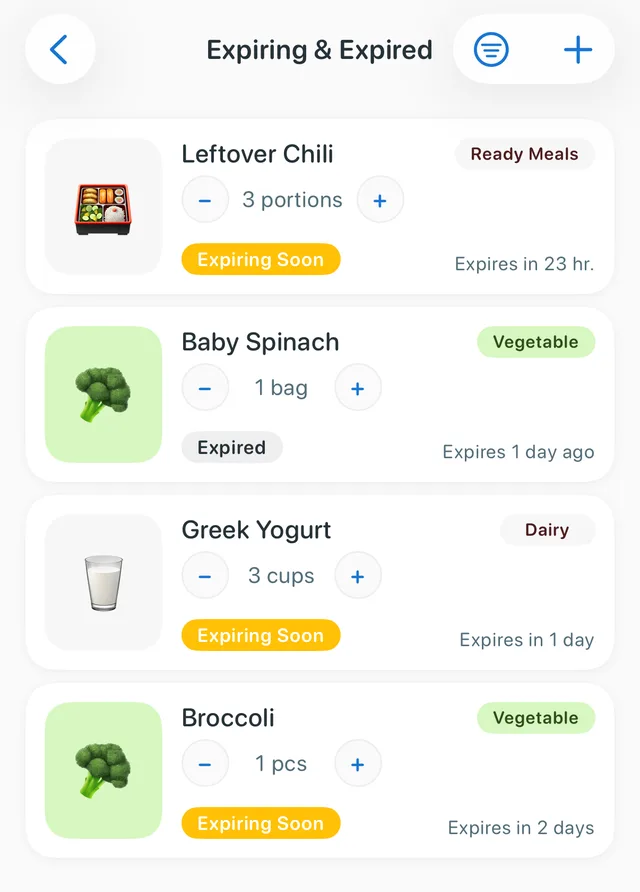
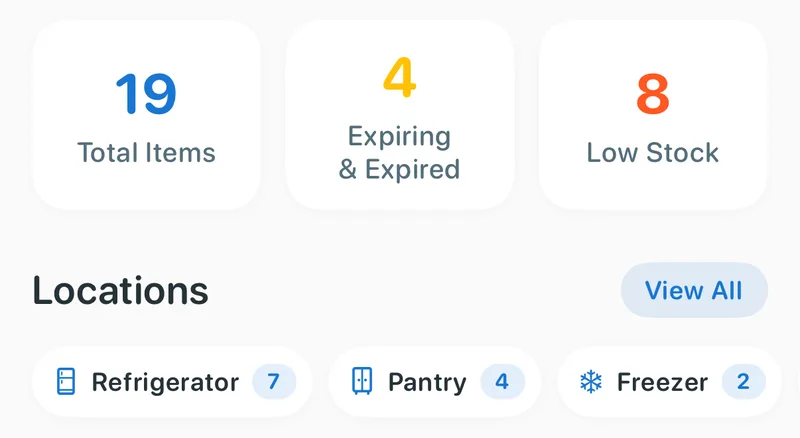
- See what to use first. The Pantry tab shows how many items are expiring soon or expired. Tap that card for a list of exactly those items, in every location, so you know what to cook this week.
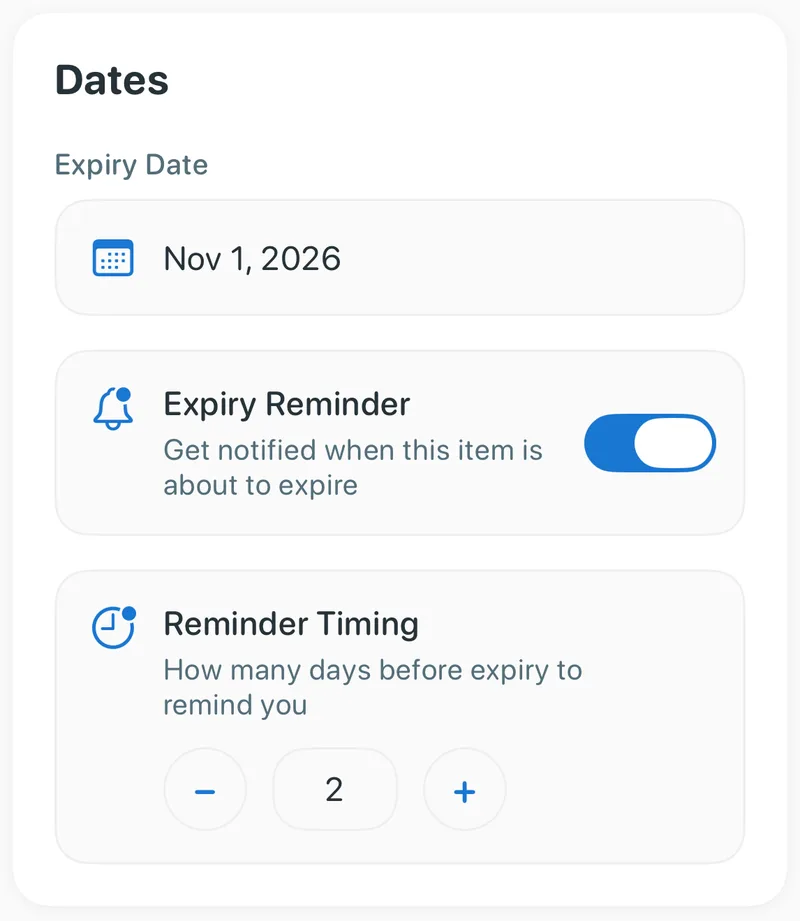
- Get a reminder before food expires. With Panzy+, turn on an expiration reminder for an item and Panzy sends a notification a chosen number of days before its date.
- Check what you have from the store. Items are organized by location (fridge, freezer, pantry and more), so you can see whether you already have spinach while you're standing in the produce aisle.
- Buy what you're actually low on. Set a low-stock level on each item and Panzy flags it when you get down to it. With Panzy+, low-stock items go onto your shopping list automatically.
Adding items is quick: scan the barcode to fill in the product details, or type a name for homemade food and leftovers. The free version tracks up to 50 items. Panzy+ adds unlimited items, expiration reminders, the automatic shopping list, iCloud sync across your Apple devices, and no ads.

Panzy: pantry tracker
Track what's in your pantry, fridge and freezer, see what is expiring soon, and keep a shopping list that knows what you're low on. Free for up to 50 items.

Common questions
What is the biggest cause of food waste at home?
Buying or cooking more than you need, then throwing out the extras. The USDA names this as the way consumers contribute to food waste. That's why checking what you have before you shop, and writing amounts on your list, make such a difference.
How much money does food waste cost a family?
The EPA estimates that the average family of four spends almost $3,000 a year on food that does not get eaten.
How long can leftovers stay in the fridge?
The USDA says 3 to 4 days in the refrigerator, or 3 to 4 months in the freezer for best quality. Refrigerate them within 2 hours of cooking (1 hour above 90°F or 32°C), and reheat to 165°F (74°C).
Is composting the same as reducing food waste?
Not quite. Composting keeps scraps out of the landfill, which is good, but on the EPA's Wasted Food Scale it ranks well below preventing waste in the first place. The biggest savings, for your wallet and the environment, come from not buying or cooking food you won't eat.